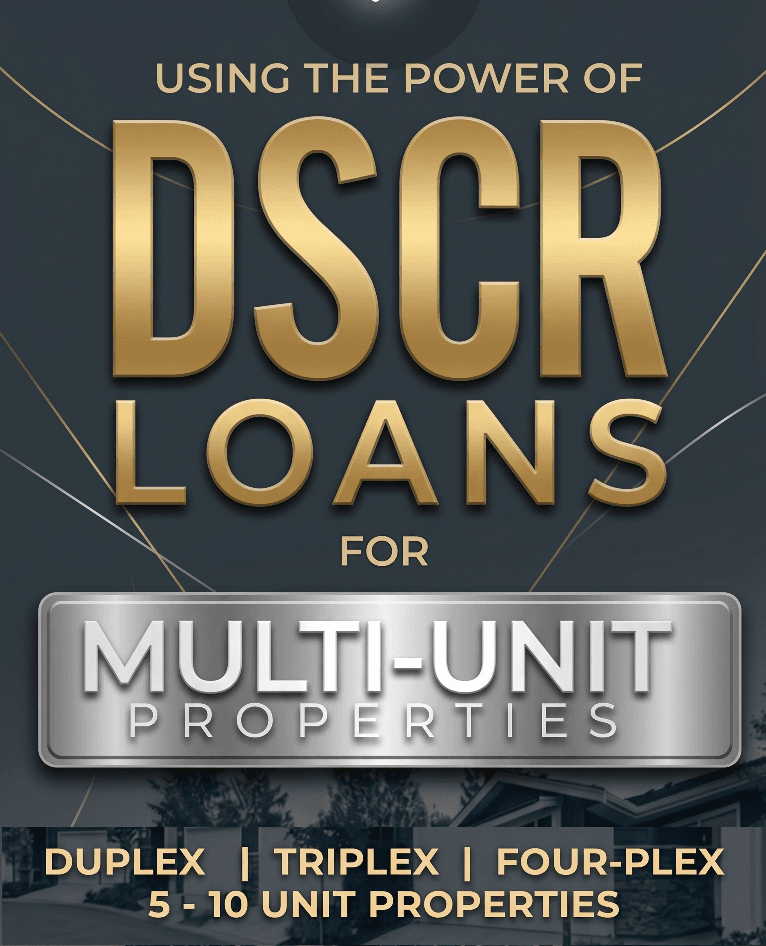
How to Scale Your Rental Portfolio with DSCR Loans (No Tax Returns Required)
If you have ever tried to buy an investment property through a traditional bank, you know the drill. You are forced to hand over a mountain of paperwork: two years of tax returns, W-2s, pay stubs, and a detailed breakdown of your personal debt-to-income (DTI) ratio.
For self-employed investors, business owners, or anyone looking to own more than a few properties, this traditional underwriting process is a massive roadblock. Write-offs that lower your tax bill also lower your "income" in the eyes of a conventional underwriter, killing your purchasing power.
Fortunately, there is a better way to play the game: DSCR Loans.
What is a DSCR Loan?
A Debt Service Coverage Ratio (DSCR) loan is a specialized mortgage designed strictly for real estate investors. The defining feature of a DSCR loan is simple: the lender qualifies you based on the rental income of the property, not your personal income.
Lenders do not verify your employment. They do not look at your pay stubs, and they do not calculate your personal DTI. Instead, they focus on one core question: Does this property generate enough rent to cover its own bills?
The DSCR Formula
Calculating the ratio is straightforward. Lenders look at the gross monthly rent and divide it by the PITIA (Principal, Interest, Taxes, Insurance, and HOA dues).
$$\text{DSCR} = \frac{\text{Gross Monthly Rental Income}}{\text{Total Monthly PITIA}}$$
- Example: If a rental property brings in $2,500 a month in rent, and the total mortgage payment (including taxes and insurance) is $2,000, your DSCR is 1.25.
What Do Lenders Look For?
Because DSCR underwriting skips your personal income documentation, lenders offset their risk by focusing heavily on the property's performance, your credit score, and your equity stake.
1. The Ratio Tiers
While guidelines vary, the market generally breaks down into three qualification zones:
- The Sweet Spot (1.25 or higher): The property generates 25% more income than its debt. This unlocks the best interest rates and maximum leverage.
- The Break-Even Zone (1.00 to 1.24): The rent covers the mortgage, but there is little breathing room. You can easily get funded here, though your rate might be slightly higher.
- The No-Ratio Zone (Below 1.00): Yes, you can actually get a DSCR loan on a property that loses money monthly (often used for short-term vacation rentals or high-appreciation markets). However, expect to put down 30% to 35% and pay a higher interest rate.
2. Standard Baseline Requirements
| Requirement | What to Expect |
| Minimum Credit Score | 620–660 (Scores above 700 unlock the best rates and leverage) |
| Down Payment | Typically 20% to 25% (15% is possible for borrowers with excellent credit) |
| Cash Reserves | 3 to 6 months of PITIA payments left in the bank post-closing |
| Property Types | Single-family homes, condos, townhomes, and 2-4 unit multifamily properties |
Why Investors Love DSCR Loans
- Unlimited Scalability: Conventional loans usually cap you at 10 financed properties. Because DSCR loans look at each property as an independent business, there is no technical limit to how many you can acquire.
- Faster Closings: Without the need to verify personal employment and income histories, underwriting is significantly streamlined. You can often close a deal in weeks rather than months.
- LLC Vesting: Most DSCR lenders allow (and prefer) you to close the loan under an LLC. This keeps your personal assets legally protected.
The Bottom Line
DSCR loans do carry slightly higher interest rates than conventional mortgages (usually 0.75% to 1.5% higher) and require a larger down payment than a primary residence loan. But for investors focused on velocity, scalability, and preserving their sanity from paperwork, it is one of the most powerful wealth-building tools available today.